The intentional shopper
The economic context is one of the factors driving the transformation of consumer behavior in Latin America
In recent years, the Latin American economy has shown signs of recovery, with GDP per capita above pre-pandemic levels and inflation slowing down. Even so, the pressure on the prices of fast-moving consumer goods, combined with the need to stretch household budgets among more sectors and expenses, has led to the emergence of a new profile: the intentional shopper.
This new consumer plans their purchases more carefully, choosing where to save and where to invest in order to keep in their basket only the products and experiences they truly value. In practice, they adopt a much more intentional behavior, balancing desire and necessity. In addition to seeking information, they apply what they have learnt in recent years — the result of testing, comparing, and experimenting — and use this experience as a strategy to get the most value out of every decision.
This is the behavior that the 2025 edition of this report seeks to reveal. The study offers an overview of shopping channels in the region, showing how they have become vehicles for brand decisions and which paths companies can follow to win consumer preference.
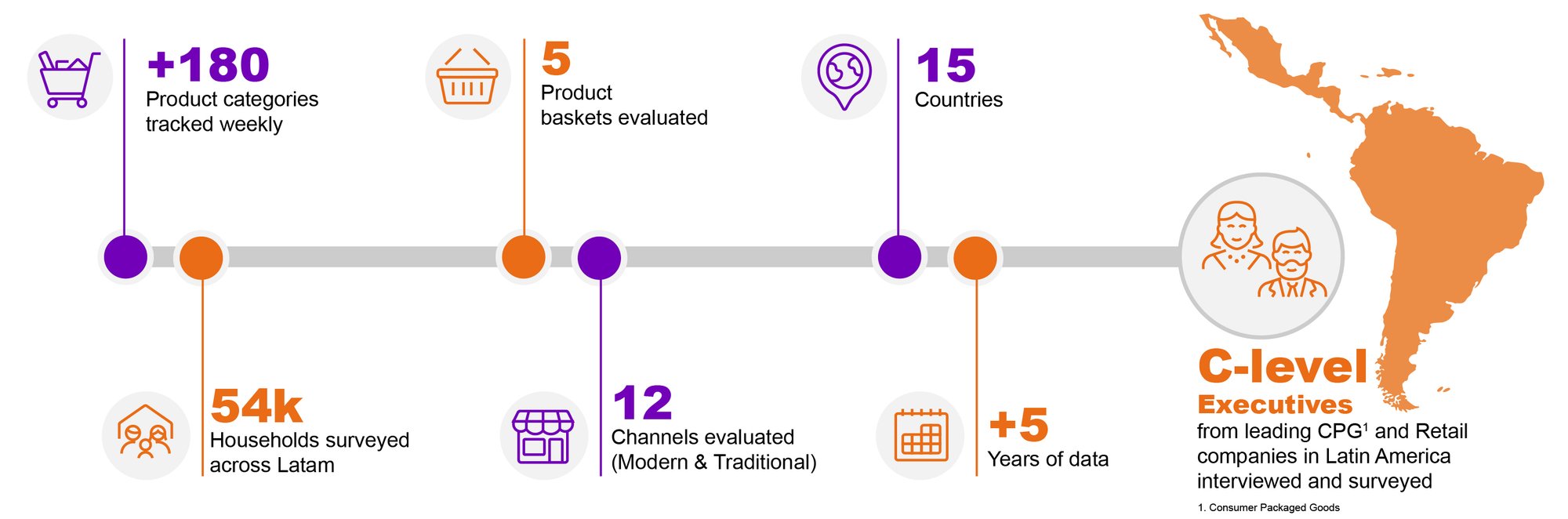
The analysis was built on data collected up to April 2025, based on the habits of more than 50,000 households in 15 Latin American markets, covering hundreds of product categories organized into six large consumption baskets. In total, 12 shopping channels — both modern and traditional — were assessed, providing an accurate view of where, how, and why decisions happen.
In the following chapters, we will explore how this intentional shopper is shaping retail through four major shifts: fewer visits, but more planned and larger purchases (with more products per trip); smart choice between economy and premium brands according to perceived value; preference for more structured channels with a clear proposition; and the increasing use of e-commerce and technology to optimize time and money.