BONUS CHAPTER
Assortment amid the fragmentation of choices
How the intentional shopper’spurchase frequency impacts SKUportfolio management
Purchase frequency plays a crucial role in structuring categories amid the fragmentation of choices made by the intentional shopper, in a context where loyalty is increasingly challenged. Understanding how different categories and channels behave is essential to ensure efficient assortment management. Efficiency means having the right SKU in the right channel, but this carries different meanings depending on each channel and category.
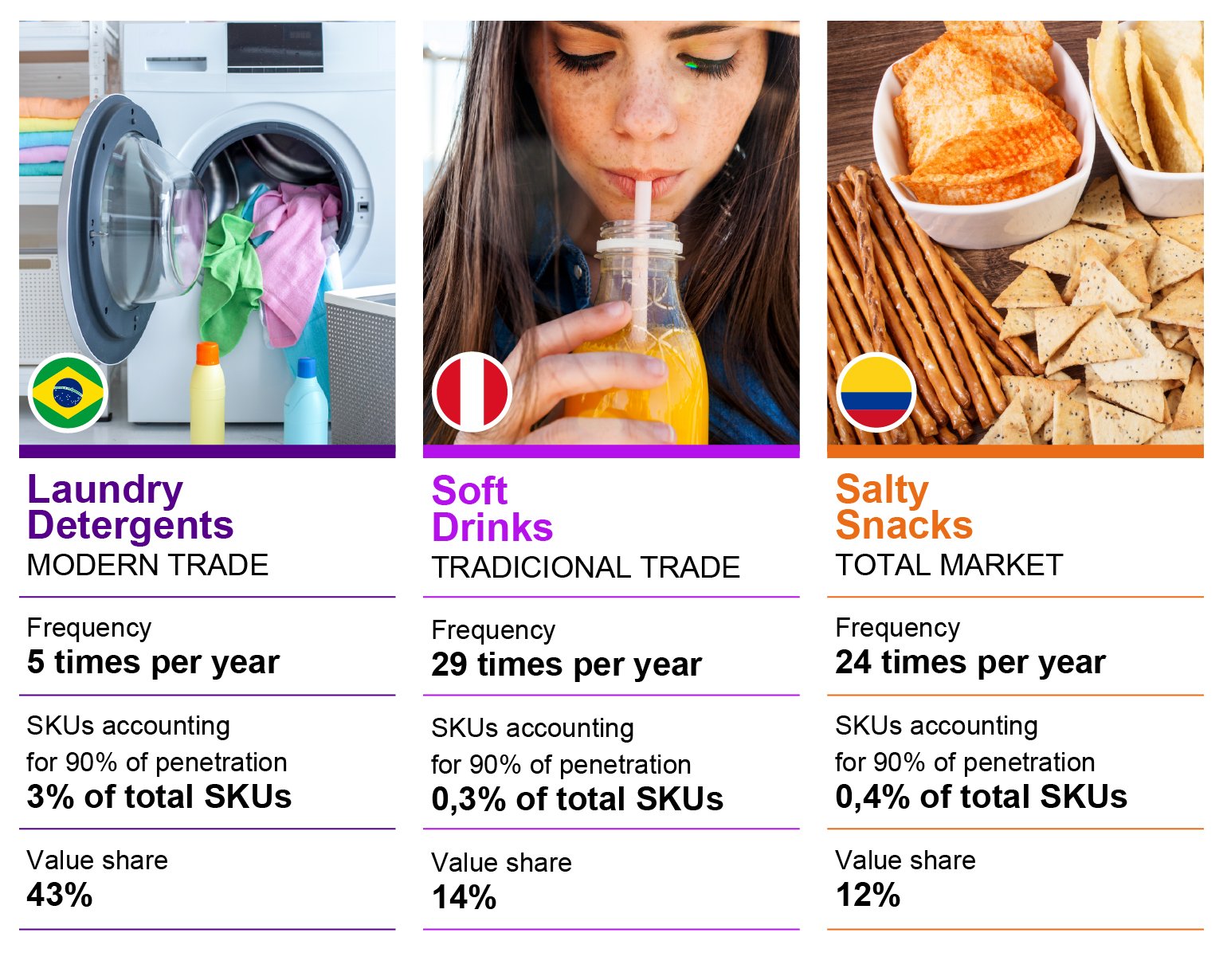
Take the example of Brazil, in the modern channel – detergent category: it is a low-frequency category that depends on a larger number of SKUs (3%) to build channel penetration and accumulate value. This means the assortment of key products is more fragmented, giving brands greater opportunity to secure their space with the right pack sizes, even with fewer purchase occasions.
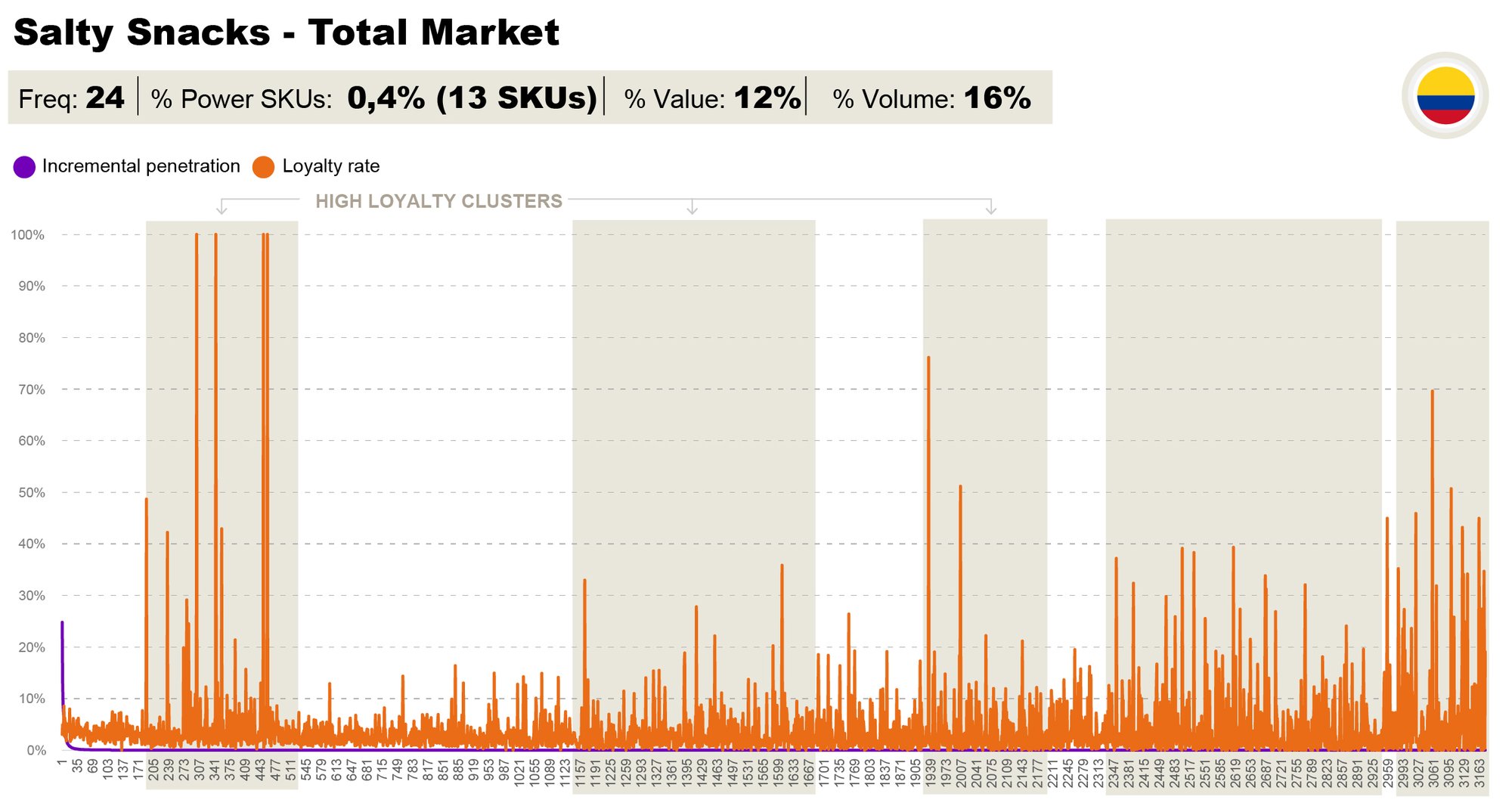
On the other hand, in the case of soft drinks in Peru, within the traditional channel, it is a high-frequency category with a large number of purchase occasions throughout the year. However, penetration is highly concentrated in a less fragmented set of SKUs, requiring greater effort from brands to expand their household reach. Value is spread across several SKUs, while penetration is concentrated in only 0.3% of them — responsible for 14% of total value share. Similarly, when analyzing the total market of a high-frequency category such as snacks in Colombia, the same pattern appears: value fragmentation and penetration concentration in a small number of SKUs.
It is not enough to analyze the penetration curve and SKU frequency alone — it is essential to understand the role and importance of each SKU within the set. The shopper’s perspective is decisive to understand the degree of loyalty to products.
In Colombia, in the snacks category, for instance, SKUs with high loyalty are observed along the curve, showing a strong connection with specific consumer groups. At the beginning of the curve, these SKUs gain even greater relevance, since their absence in the channel can represent a significant loss of shoppers for the brand.
SKUs with high loyalty located in the middle of the curve, in turn, also deserve special attention: when prioritized, they have the potential to attract a relevant consumer base in the future, helping to achieve higher levels of penetration and value share — especially in high-frequency categories.
That is why it is essential for brands to understand how to segment their portfolio strategically along the curve, identifying the role each SKU plays — whether to drive sales, consolidate the consumer base, strengthen loyalty, or combine these functions in a complementary way.