Unlocking pockets of growth
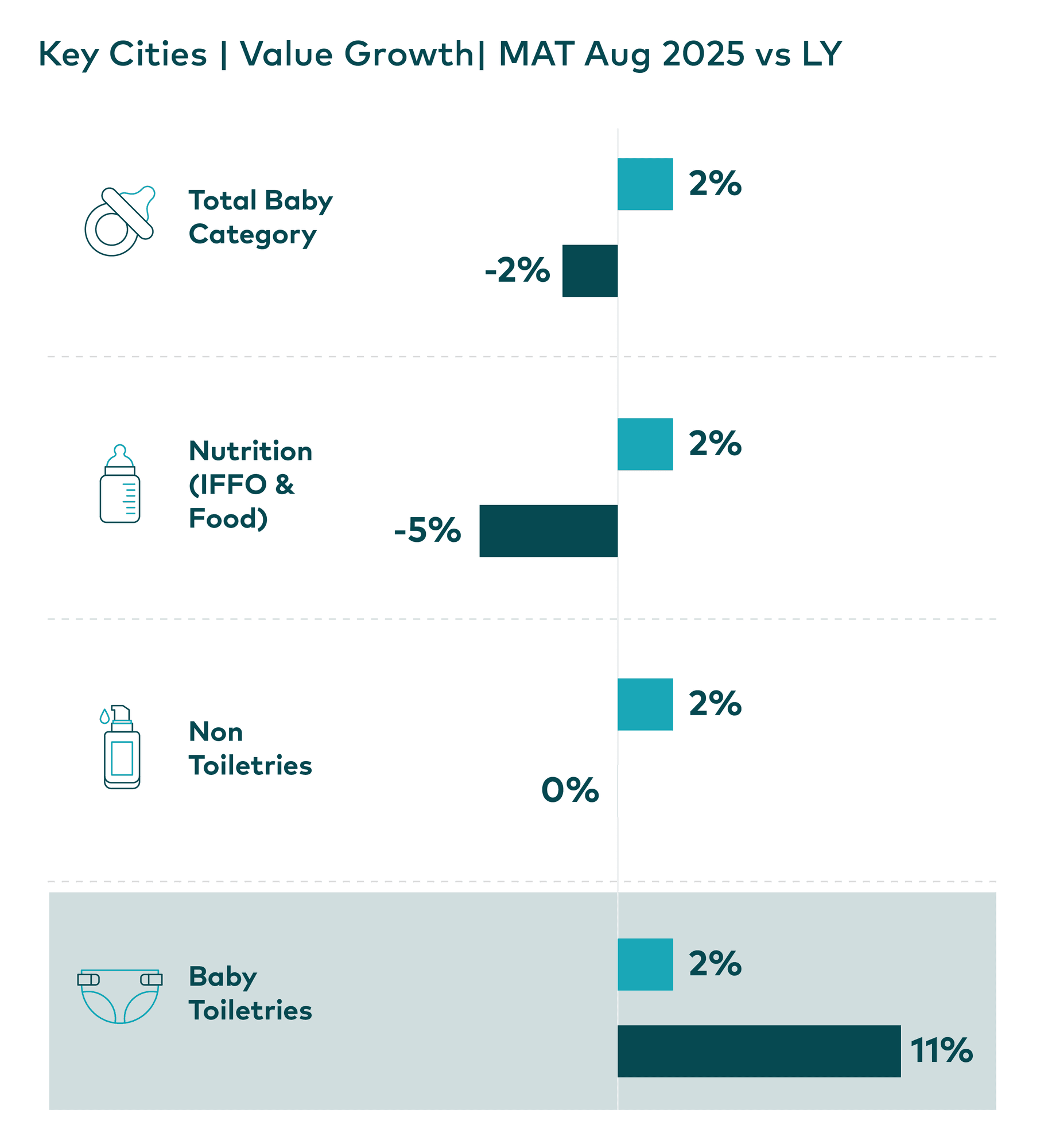
With one-third of the baby category’s value share and a substantial buyer base, Indonesia’s key cities represent a critical growth pocket for brands aiming to win. Shoppers in these regions are more mature and discerning, demanding benefit-led propositions that go beyond basic needs. They are willing to invest in credible innovation and quality.
Within the baby segment, baby toiletries stand out with rapid growth at 11%, outperforming other categories. This growth spans across subcategories such as shower gel, hair treatment, and cream/lotion, driven by both premium and super-premium brands. Notably, some toiletries brands with an API (Average Price Index) above 200 continue to attract new buyers and increase spending, while mainstream brands are also doubling their buyer base through premium assortments.
This underscores the importance of offering differentiated benefits at a justified price point – enabling brands to grow through both shopper recruitment and higher spending.
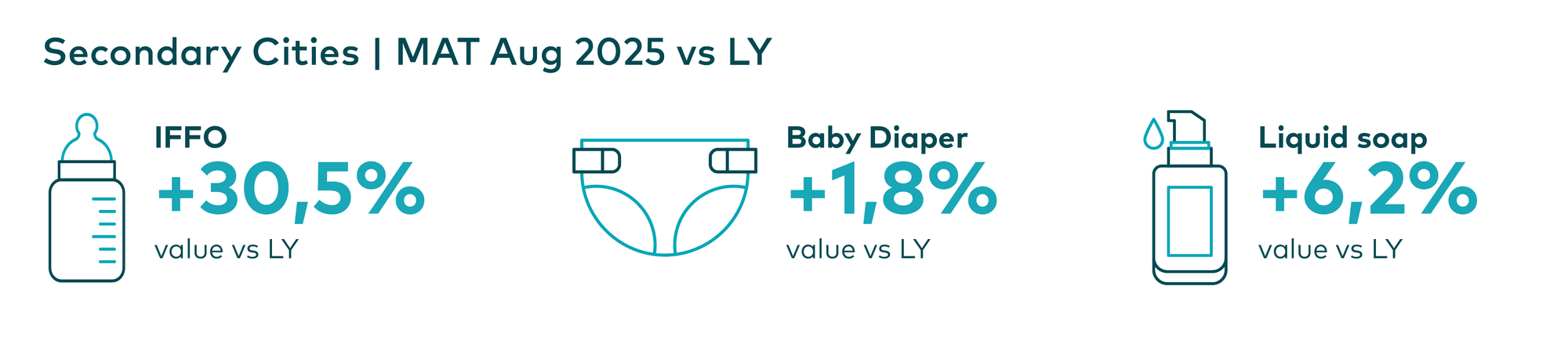
Secondary cities, which hold more than 30% of the value in the baby sector, bridge rural practicality and urban aspiration. In these areas, the infant nutrition category is experiencing robust double-digit growth, fuelled by both mainstream and premium brands – in contrast with the slower performance seen in other nutrition segments.
A similar dynamic is observed in the diaper category, where select premium brands are successfully expanding their shopper base by enhancing accessibility through sachet formats and delivering value via jumbo packs. This dual strategy of affordability and reach is also evident in baby toiletries, reinforcing that shopper recruitment in secondary cities can be effectively driven through both value-for-money propositions and format-led accessibility.
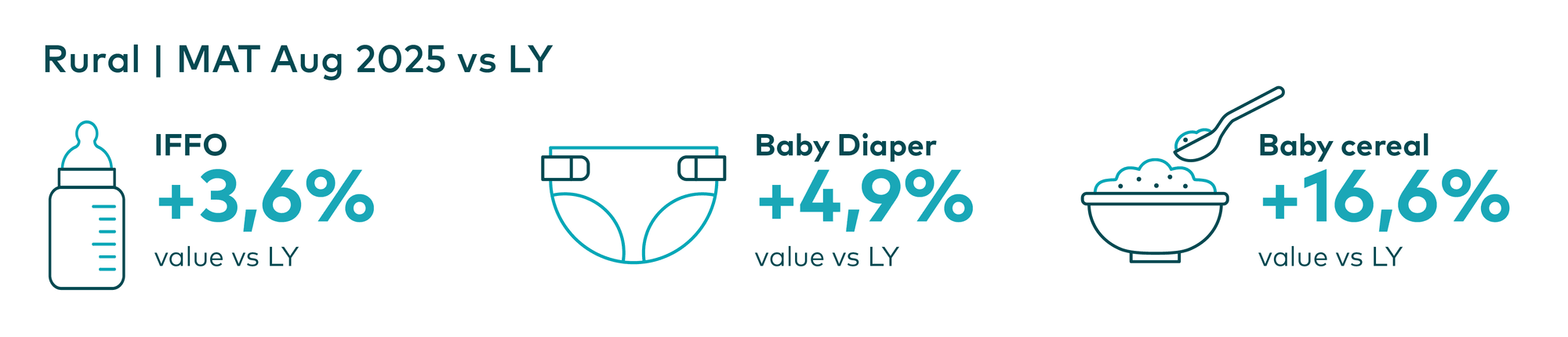
Rural areas, which become the next growth frontier, emerge as the most critical region for shopper recruitment and brand growth. Here, price-conscious consumers prioritise affordability and consistent access, making price competitiveness and reliable availability essential levers for success.
Across baby categories, brands that effectively balance affordability with accessibility outperform the competition – regardless of whether they are premium or mainstream. Even premium brands must ensure reach and affordability to resonate with rural shoppers.
Optimising the pack-price strategy is key to winning share of wallet. Offering the right price point which aligns with the shopper’s cash outlay can hit the sweet spot to recruit rural buyers. This reinforces that in rural markets, growth is unlocked by meeting everyday needs through smart, value-led solutions.
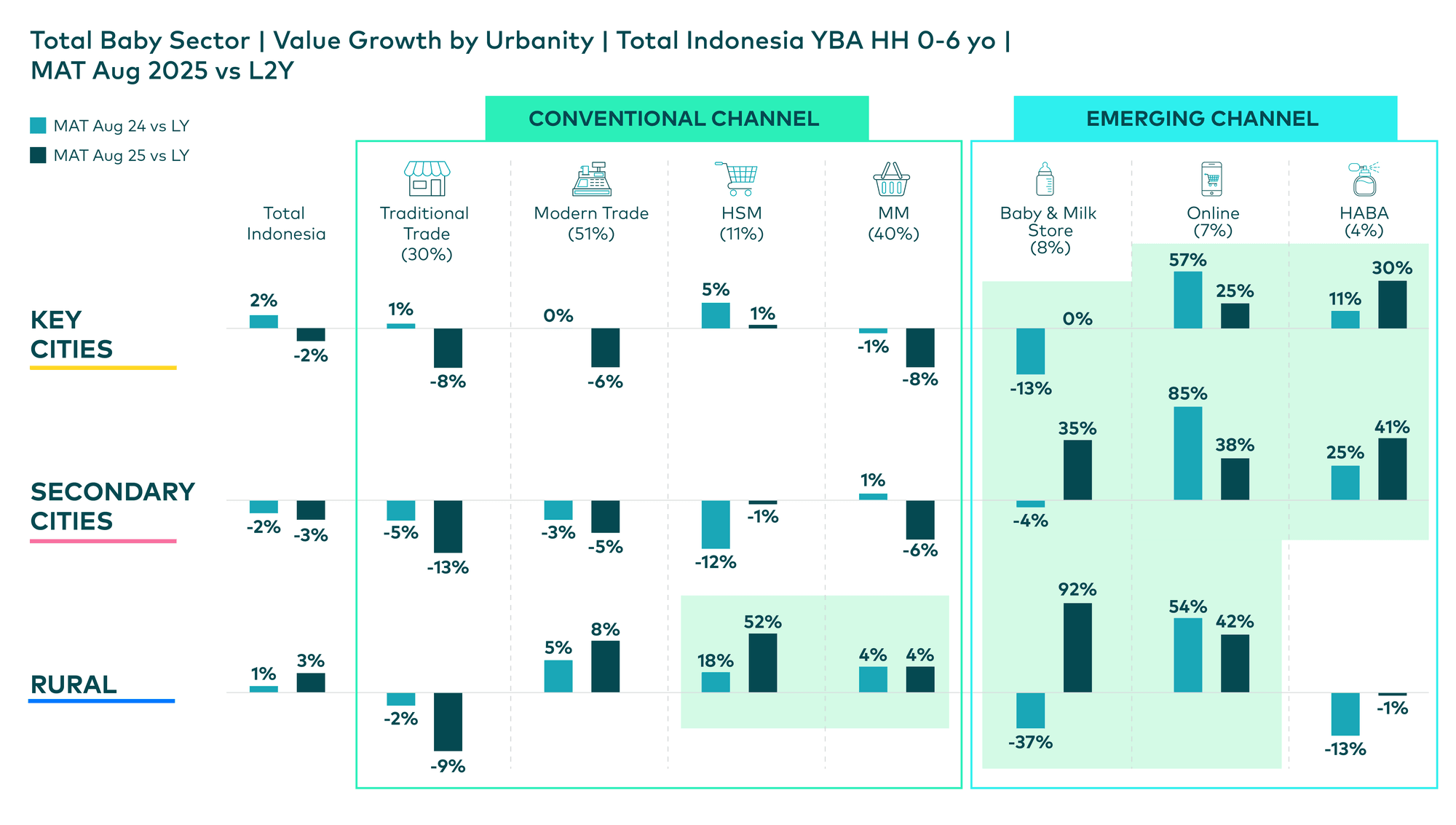
Channel growth continues to evolve in distinct ways across the different regions of Indonesia, shaped by both shopper behaviour and retail dynamics.
Among the conventional channels, value growth in Modern Trade – mainly supermarkets – is accelerating in rural areas at more than 50%, largely driven by independent store formats. Traditional Trade, on the other hand, shows limited growth across all regions.
Despite slower momentum, these channels remain critical sources of opportunity, especially as shopping occasions become more selective . Brands must focus on capturing high-value moments with relevant offerings and strong in-store execution.
In contrast, emerging channels are showing robust growth. Baby & Milk Stores are gaining traction in rural and secondary cities, though growth has reached a saturation point in key cities. Online channels continue to expand consistently across all regions with double-digit growth, despite slower momentum this year, reflecting shoppers’ omnichannel behaviour. Meanwhile, HABA (Health and Beauty Aids) channels are thriving in urban areas with more than 30% growth, driven by rising demand for specialised, benefit-led products.
To stay competitive, brands must tailor their route-to-market strategies by region – ensuring strong availability and affordable offerings, and leveraging emerging channels to unlock sustainable growth.
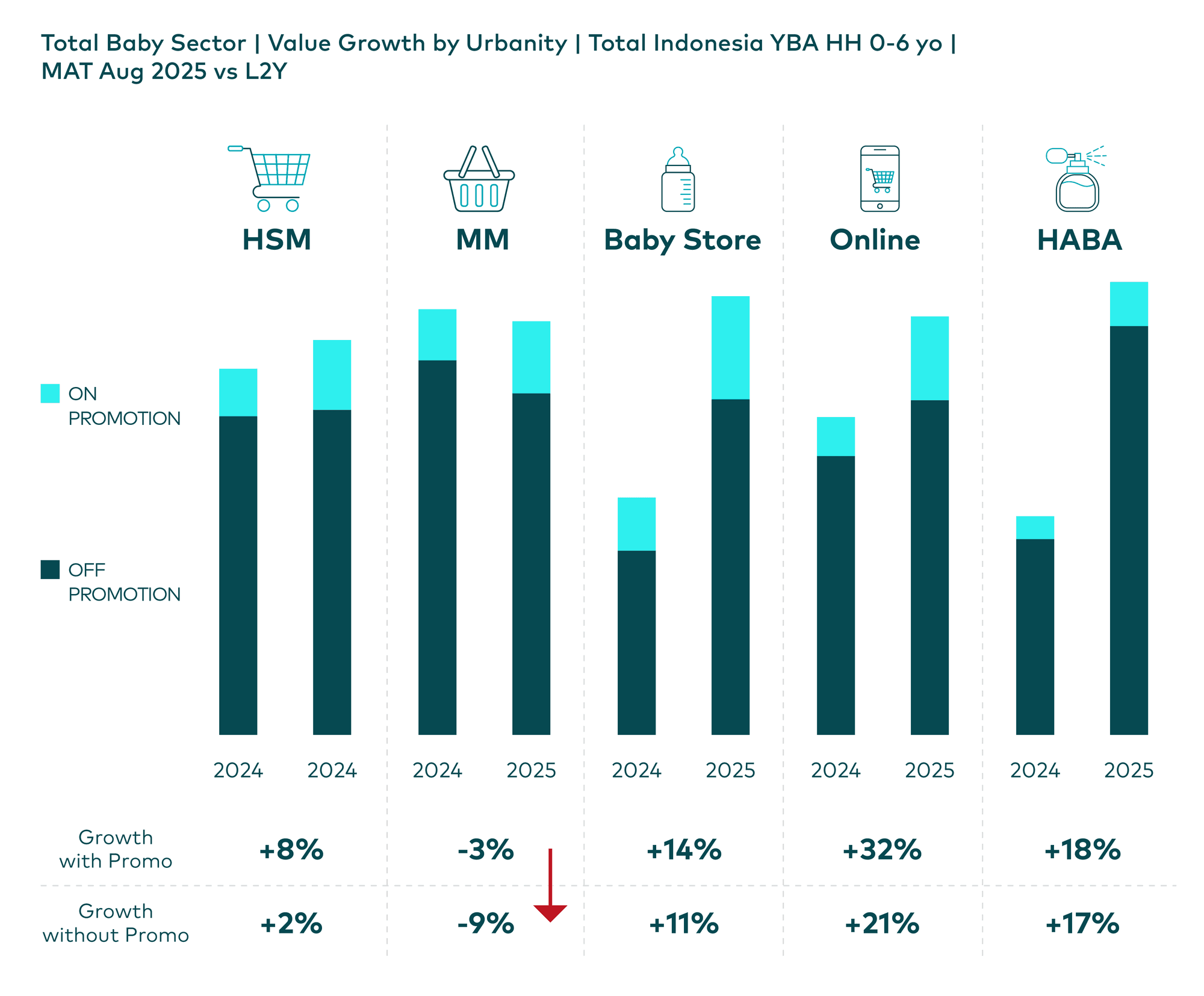
Promotion remains a key lever in the baby category, with an increasing share of volume bought on promotion across channels. When thoughtfully optimised, promotions can serve as a powerful growth accelerator. However, if not managed effectively, they risk eroding value. An effective promo strategy should not only drive faster growth, but also faster recruitment.
In baby care, promotions in supermarkets, baby stores, and online channels have proven to be impactful – stimulating growth, and suggesting that value-led offers resonate well in these environments. Conversely, in minimarkets, promotions have helped to soften the sector’s decline. However, it’s important to note that consumers may have become reliant on promotions in this channel. This means that developing a strategy that balances recruitment with spending growth will be key to sustaining performance.