The weight of circumstances
The economic and social context is redefining the environmental urgency in Latin America
Latin America remains a region of contrasts. While Chile leads environmental policies and recycling efforts, major urban centers like Bogotá, Mexico City, and São Paulo still face challenges related to water efficiency, pollution, and waste management.
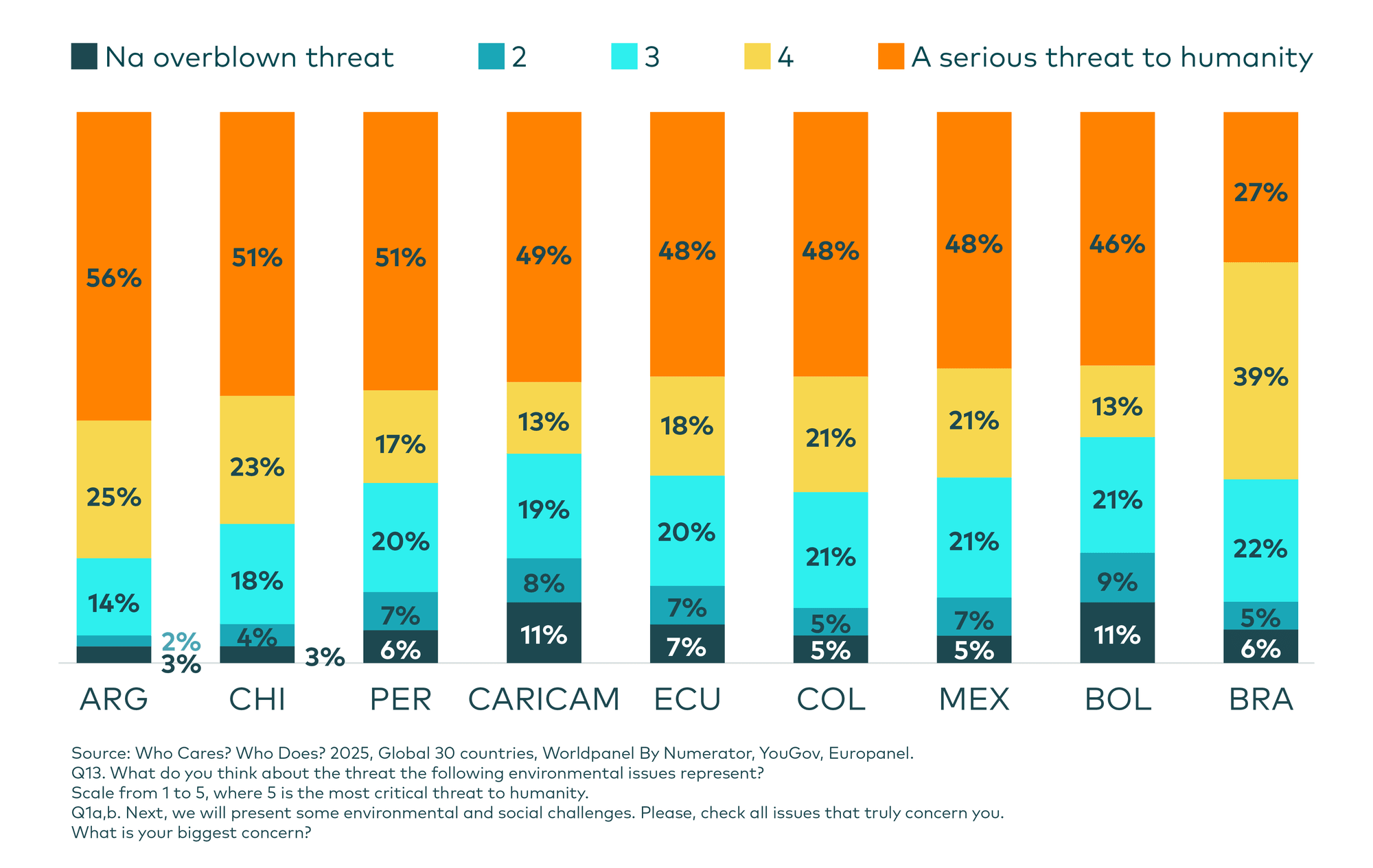
These structural differences also shape how people perceive the environmental crisis. Although the social and economic debate has grown stronger in recent years, 47% of the population still see climate change as a major threat to humanity — well above the global average of 33%. Brazil, along with some Central American countries, deviates slightly from this pattern: only 27% consider the issue extremely serious — partly a reflection of the country’s environmental privileges.
Despite acknowledging the severity of climate change, many Latin Americans say acting sustainably is becoming harder and harder. In 2025, 36% state that social or economic issues hinder sustainable behavior — a five-point increase compared to the previous year.
This tension becomes even clearer in consumption patterns. While 33% of Latin Americans in 2024 said they were bothered by the amount of plastic in their purchases, that number soared to 60% in 2025. Effective action, nonetheless, dropped: the share who actually avoid plastic products fell from 36% to 32%, which brings us back to the previous point: the difficulty of acting sustainably.
Moreover, there is a growing perception that responsibility for environmental damage does not lie with individuals, which adds complexity to the picture. Only 30% of Latin Americans believe they can make a difference, while 40% place that responsibility in the hands of the industry.
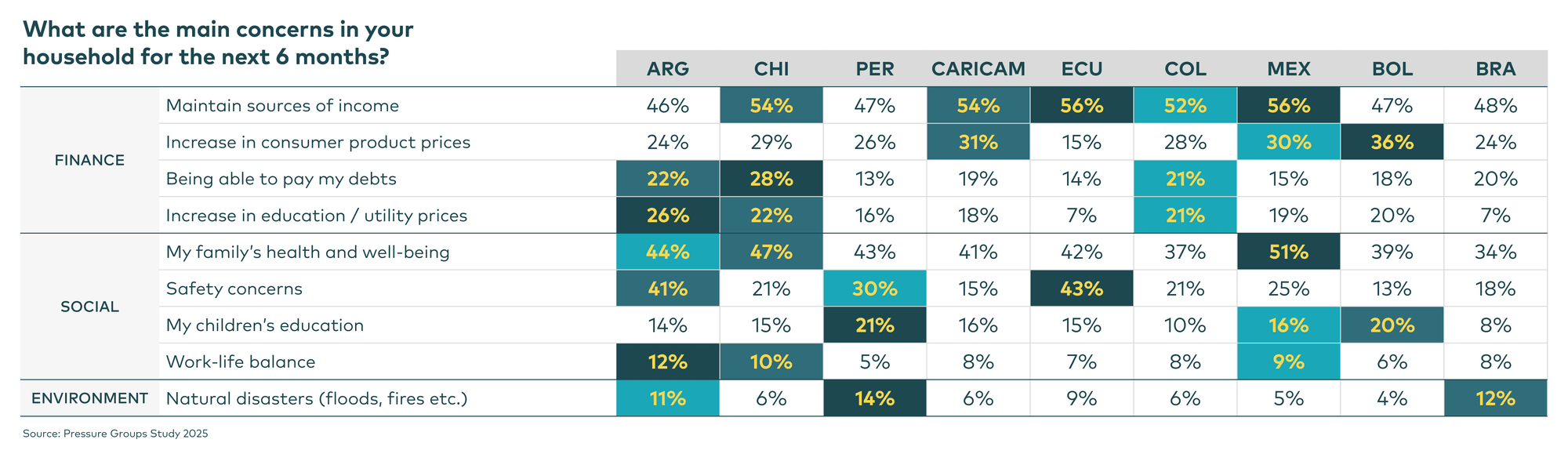
These data reveal a pullback in sustainable action in the face of challenging contexts. As economic and social concerns take precedence, environmental issues tend to move to third place — still relevant, but subject to fluctuation according to the circumstances.
The challenge now is to reconnect the sustainability narrative with people’s daily lives — transforming the feeling of urgency into feasible actions, even in times of instability.